
Guide · Feb 16, 2024
How Do I Get Out of Credit Card Debt Fast?
The quickest exits combine a lower interest rate with a bigger monthly payment. Here's how to pick the right one for your balance.
By Michael Gonzales · Last updated

Short answer: Stop adding new charges, list every card with its balance and APR, and put every spare dollar toward one card at a time while paying the minimum on the rest. The fastest results come from cutting the interest rate too, through a 0% balance transfer, a lower-rate consolidation loan or a hardship plan from your card issuer.
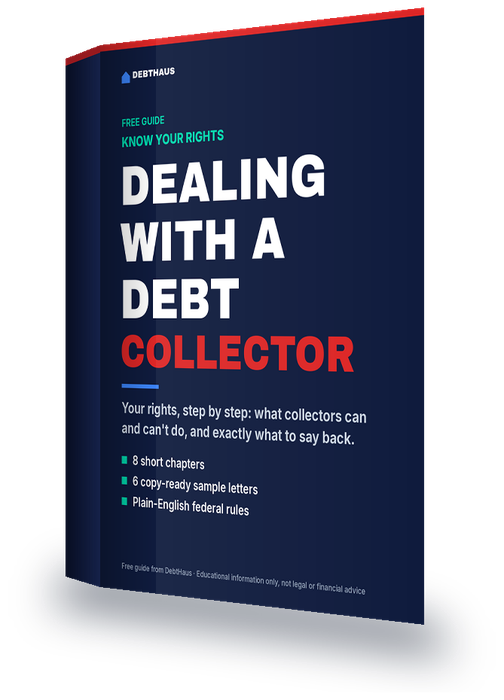
Dealing With a Debt Collector
Your rights, step by step, plus 6 sample letters. A free 29-page PDF sent to your inbox.
We email you a confirmation link first. No spam, unsubscribe anytime.
Step 1: Get the full picture
Write down each balance, APR and minimum payment. Your statements show all three, and your free credit reports at AnnualCreditReport.com catch any account you forgot about. The Federal Reserve's G.19 data puts the average rate on card accounts that pay interest above 20%, so the APR column usually explains why balances barely move.
Step 2: Pick a payoff order
- Avalanche: highest APR first. Costs the least in interest.
- Snowball: smallest balance first. Gives quick wins that keep some people going.
Either works if you stick to it. Our avalanche vs. snowball comparison runs the numbers.
Step 3: Lower the rate
| Option | Best for | Watch out for |
|---|---|---|
| 0% balance transfer card | Good credit, balance you can clear in 12–21 months | 3%–5% transfer fee; rate jumps after the promo |
| Consolidation loan | Fair-to-good credit, want one fixed payment | Origination fees; running the cards back up |
| Issuer hardship plan | Missed or nearly missed payments | Card may be closed or frozen |
| Nonprofit debt management plan | Several cards, high rates | Small monthly fee; cards are closed |
Step 4: Find money for bigger payments
Trim one or two recurring bills, sell something you no longer use, or send windfalls such as a tax refund straight to the target card. Even $100 a month extra shortens most payoff timelines by years.
What to avoid
The FTC warns that it's illegal for a debt relief company to charge fees before it settles any of your debt, and that you should be wary of anyone telling you to stop paying your cards. Skipping payments brings late fees, penalty APRs and collections.
Sources
- Federal Reserve, G.19 Consumer Credit release
- CFPB, Credit cards
- FTC, How to get out of debt
- FTC, Credit card debt relief that isn't
- AnnualCreditReport.com (the only federally authorized free report site)
Last reviewed October 12, 2026. This article is general information, not legal, tax or financial advice.
Frequently asked questions
What is the fastest way to pay off credit card debt?
Combine a lower interest rate (balance transfer, consolidation loan or hardship plan) with the largest monthly payment you can manage, aimed at one card at a time.
Should I stop using my credit cards while paying them off?
Yes, if you can. New charges cancel out extra payments. Keep one card for emergencies only if you trust yourself not to use it.
Is it smart to take money from savings to pay off cards?
Paying off a 20%+ APR card is a sure return, but keep a small emergency cushion so a surprise bill doesn't land back on the card.
Can I get out of credit card debt without hurting my credit?
Paying on time and lowering balances helps your score. Settlement and missed payments are what hurt it.
Written by
Michael Gonzales
Founder & Editor
Michael Gonzales is the founder of Cloudalien Technologies LLC, the company that owns DebtHaus. DebtHaus is not a lender, broker, settlement company or law firm.